
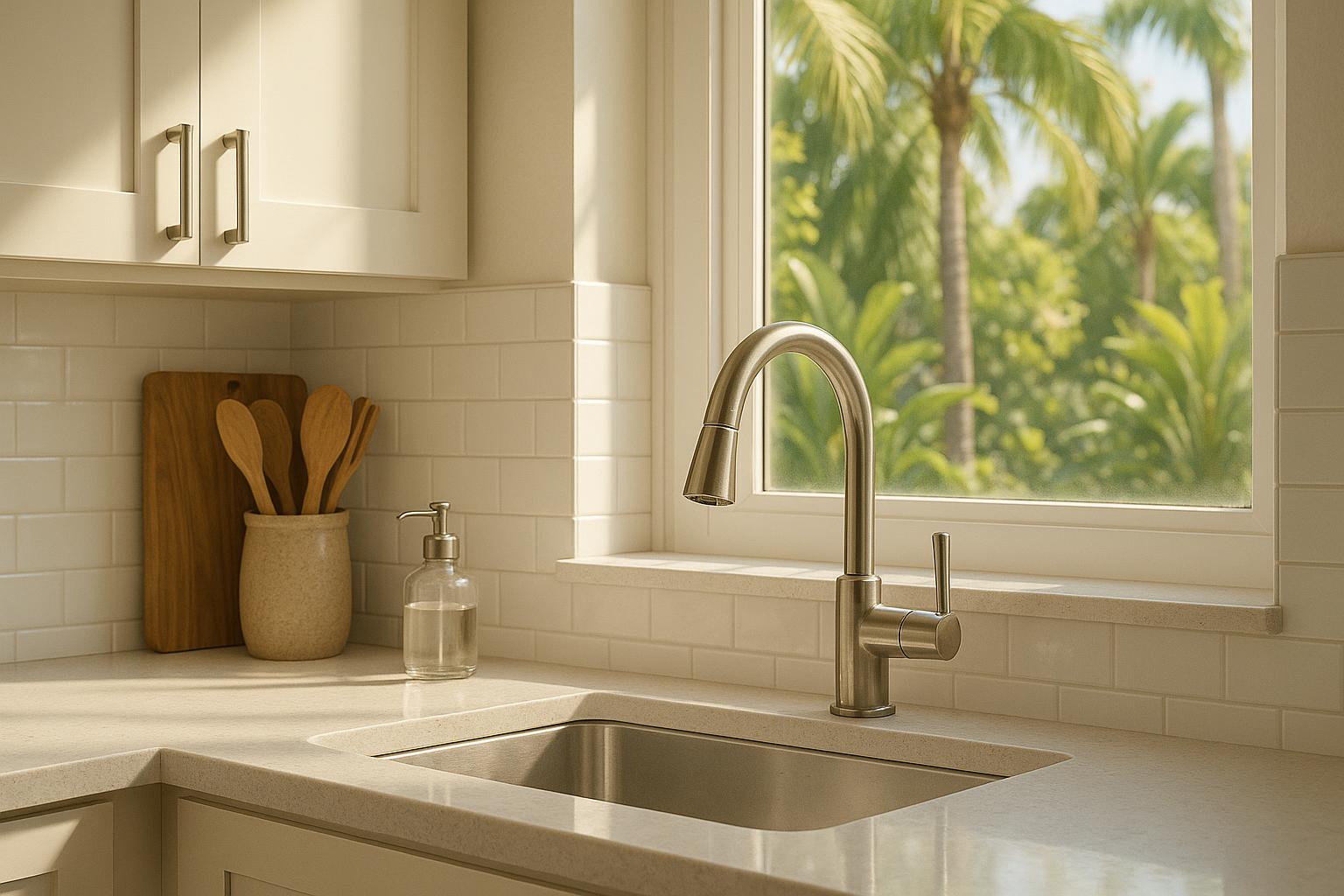
Why Material Selection Matters More in South Florida
If you've ever watched a beautiful wood floor buckle after one rainy season or seen grout turn black in a bathroom that seemed perfectly fine six months ago, you already know the truth: not every material is built for life in South Florida. The combination of high humidity, intense UV exposure, salt air, and seasonal storms creates an environment that punishes poor material choices faster than almost anywhere else in the country.
For homeowners in North Miami Beach planning a kitchen or bathroom remodel, selecting the right materials isn't just an aesthetic decision — it's a durability decision. The good news is that today's market offers plenty of stunning options that are engineered to thrive in our climate. You just need to know what to look for and what to avoid.
Countertops: Beauty That Can Handle the Heat
Countertops are one of the biggest investments in any kitchen or bathroom remodel, so getting this choice right matters. Here's how the most popular options hold up in our climate:
- Quartz: Engineered quartz is one of the best all-around choices for South Florida homes. It's non-porous, which means it won't absorb moisture or harbor mold and mildew — a real concern in our humid environment. It resists staining, doesn't need sealing, and comes in a huge range of colors and patterns.
- Granite: Natural granite is a classic choice and performs well in our climate, but it does require periodic sealing to maintain its resistance to moisture and staining. If you're willing to keep up with that maintenance, granite remains a beautiful and durable option.
- Marble: Marble is gorgeous but more porous and prone to etching and staining. In a high-humidity bathroom, it demands more upkeep. It can absolutely work in a North Miami Beach home, but go in with realistic expectations about maintenance.
- Porcelain slab: A newer option gaining popularity, porcelain slab countertops are virtually impervious to moisture, UV rays, and heat. They're an excellent choice for outdoor kitchens as well as indoor spaces.
Cabinetry: Moisture Is the Enemy
Cabinets take a beating in humid climates, especially in bathrooms and kitchens where steam and splashing water are part of daily life. Here's what to consider:
- Solid wood with proper finishing: Hardwood cabinets can last decades in South Florida, but only if they're properly sealed and finished. Look for cabinets with catalyzed lacquer or conversion varnish finishes that create a strong moisture barrier.
- Plywood construction over particleboard: This is non-negotiable in our climate. Particleboard and MDF absorb moisture and swell over time. Plywood-box construction holds up dramatically better in humid conditions.
- Thermofoil caution: Thermofoil cabinets — made by applying a vinyl layer over MDF — are budget-friendly but notorious for peeling and delaminating in high-heat, high-humidity environments. We've seen this happen repeatedly in South Florida homes.
If you're investing in a cabinet upgrade, spending a little more on quality construction and moisture-resistant finishes will save you from a costly replacement down the road.
Flooring: What Stands Up to Humidity and Foot Traffic
Flooring is where many homeowners in our area make their most regrettable material choices. Here's a breakdown of what works and what doesn't:
Great Choices
- Porcelain and ceramic tile: Tile remains the gold standard for South Florida homes. It's waterproof, incredibly durable, cool underfoot, and available in styles that mimic wood, stone, and concrete. Large-format porcelain tiles are especially popular right now for creating a clean, modern look in kitchens and bathrooms.
- Luxury vinyl plank (LVP): Waterproof LVP has become a go-to for homeowners who want the look of hardwood without the moisture risk. High-quality LVP is comfortable, affordable, and handles humidity without warping or buckling.
- Polished concrete: For a contemporary aesthetic, polished or stained concrete floors are virtually indestructible in our climate and naturally resistant to moisture.
Proceed with Caution
- Solid hardwood: Traditional hardwood floors and South Florida humidity are a difficult combination. Wood expands and contracts with moisture changes, leading to gaps, cupping, and warping. If you're set on real wood, engineered hardwood is a better option — its layered construction is more dimensionally stable.
- Natural stone: Travertine and other natural stones are beautiful but porous. They require regular sealing and can become slippery when wet, which is worth considering for bathroom floors.
Tile and Grout: The Details That Make the Difference
Custom tile installation is one of the most common elements in kitchen and bathroom remodels, and the details matter just as much as the tile itself:
- Choose epoxy grout over cement-based grout: Epoxy grout is more resistant to moisture, mold, and staining. It costs a bit more but dramatically reduces maintenance in bathrooms and kitchen backsplashes.
- Use large-format tiles to minimize grout lines: Fewer grout lines mean fewer places for moisture and mildew to take hold. This is both a practical and aesthetic win.
- Ensure proper waterproofing behind the tile: In showers and wet areas, the waterproofing membrane behind the tile is arguably more important than the tile itself. A quality contractor will never skip this step.
Hardware and Fixtures: Don't Overlook the Small Stuff
Salt air is particularly hard on metal finishes, even in homes that aren't directly on the beach. Homeowners in Sunny Isles Beach, Aventura, and Hallandale Beach should pay special attention to this, but it applies across the region:
- Best bets: Stainless steel, brushed nickel, and PVD-finished fixtures hold up best against corrosion and tarnishing.
- Use caution with: Polished brass and chrome can pit and corrode more quickly in salt-air environments without regular cleaning and care.
- Cabinet hardware: The same rules apply. Choose finishes rated for humid or coastal environments, and your hardware will look new for years instead of months.
How a Local Contractor Makes a Difference
One of the biggest advantages of working with a remodeling contractor based in North Miami Beach is climate-specific knowledge. A contractor who has spent years working in South Florida understands which materials perform well here and which ones lead to callbacks and complaints. They've seen what happens when the wrong grout is used in a steam shower or when particleboard cabinets meet a summer of afternoon thunderstorms.
At Reliant Foundation Contractors, we guide our clients through every material selection with durability and local conditions in mind. We want your remodel to look stunning on day one — and still look that way five, ten, and twenty years from now.
The Bottom Line
A successful remodel in South Florida starts with choosing materials that are designed to handle our unique climate. Prioritize moisture resistance, UV stability, and quality construction over trends that may not hold up in the long run. When you pair smart material choices with experienced craftsmanship, you get a kitchen or bathroom that's built to last — no matter what the weather throws at it.
If you're planning a remodel and want help choosing the right materials for your home, reach out to our team. We're happy to walk you through your options and help you make decisions you'll feel great about for years to come.